
Tea packaging is no longer just about containment. In 2025, metal tea tins are becoming one of the clearest signals of premium positioning, helping brands move beyond commodity competition and into a market shaped by ritual, collectability, storytelling, and long-term brand memory.
Tea has always carried cultural meaning, and historically the container itself often reflected taste, status, and ceremony. That older logic is returning in a modern form. Today’s premium tea buyer is not only comparing origin, aroma, or harvest story. They are also judging whether the packaging feels worthy of the product inside.
That is why metal tea tins are gaining importance across premium tea retail, gifting, export, and specialty e-commerce. Compared with lightweight cartons or flexible pouches, a well-made tea tin offers a stronger sense of permanence, better shelf presence, and a more credible premium identity from the very first touch.
The shift is not simply visual. It reflects a broader change in consumer behavior. Tea buyers increasingly shop the way fragrance, chocolate, or whisky buyers shop: they want the product to feel refined, giftable, and emotionally satisfying.
| Packaging Dimension | Standard Paper / Pouch Format | Premium Metal Tea Tin |
|---|---|---|
| Shelf appeal | Often functional and easy to replace | Stronger visual presence and more premium display value |
| Brand identity | Easier to become generic in crowded categories | Supports more distinct color, structure, texture, and recognition |
| Freshness perception | Acceptable, but often less reassuring for premium positioning | Higher trust when paired with airtight or double-lid structures |
| Giftability | Limited unless paired with secondary gift packaging | Naturally gift-ready and more suitable for seasonal collections |
| Post-purchase life | Usually discarded after use | Often reused, displayed, collected, or refilled |
Luxury packaging must be felt, not just seen. Embossed logos, sculpted lids, crisp linework, and smooth edge treatment all contribute to a premium tactile experience. When buyers run their fingers across a raised mark or hold a tin with balanced weight and refined finishing, the brand message becomes physical.
Soft-touch matte finishes are increasingly associated with premium tea, especially for brands that want a contemporary and understated image. These surfaces feel closer to premium cosmetics than traditional commodity packaging, while also reducing glare and improving shelf sophistication.
Color is no longer decoration alone. Premium brands are using carefully controlled signature tones to build instant recognition across stores, gift sets, and online listings. A distinctive Pantone-driven color system can make the tea tin itself part of the brand’s identity architecture.
Shape is becoming as important as print. Brands are moving beyond basic round canisters toward taller silhouettes, square tins with softened corners, stackable collections, and double-lid structures that support both freshness and memorability. The structure itself becomes a recognition tool.
Premium tea buyers increasingly respond to packaging that carries context. Regional illustrations, botanical drawings, harvest references, heritage-inspired patterns, festival symbols, and emotionally resonant limited-edition artwork all help transform a tin from packaging into a story object.
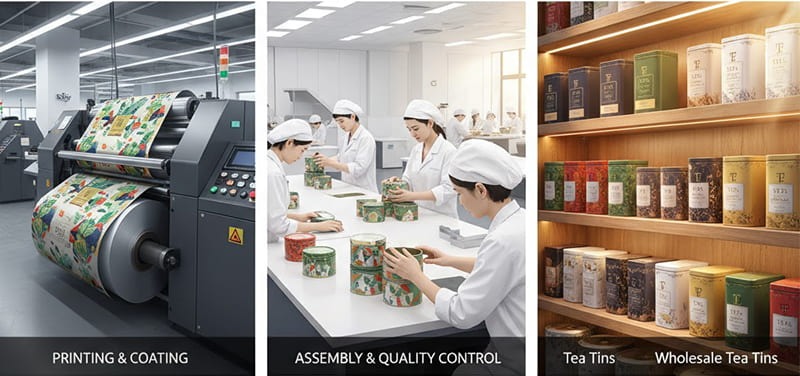
Premium tea tins are not valued only because they cost more to produce. They can also justify higher pricing in the eyes of the buyer.
For e-commerce brands, this matters even more. Online buyers cannot touch the product before purchase, so packaging must carry a larger share of the premium signal. A distinctive tea tin improves both click-level perception and the post-delivery unboxing experience.
One of the strongest idea is that custom tea tins should not be treated as one-off decorative packaging. They work best as a system that supports brand growth across multiple scenarios.
| Brand Lever | Tea Tin Execution | Commercial Effect |
|---|---|---|
| Premium recognition | Embossing, matte surfaces, refined edges, signature colors | Stronger first impression and better premium positioning |
| Freshness trust | Airtight or double-lid structures, food-grade inner coating | Higher product confidence and stronger repeat purchase logic |
| Collectability | Seasonal editions, cultural graphics, numbered or themed series | More gifting demand and repeat collection purchases |
| Social and e-commerce shareability | Distinctive unboxing, personalized visuals, memorable shape | Higher organic exposure and stronger online brand discussion |
| Sustainability signal | Reusable, recyclable metal packaging with durable post-use value | Better fit for premium consumers who value responsible packaging choices |
Premium tea buyers do care about sustainability, especially in export markets, but what persuades them most is the combination of durability, reuse, beauty, and reduced disposability.
In other words, the strongest sustainability story for tea tins is not simply “metal can be recycled.” It is that the package is designed to remain useful, attractive, and brand-visible long after the original tea has been consumed.
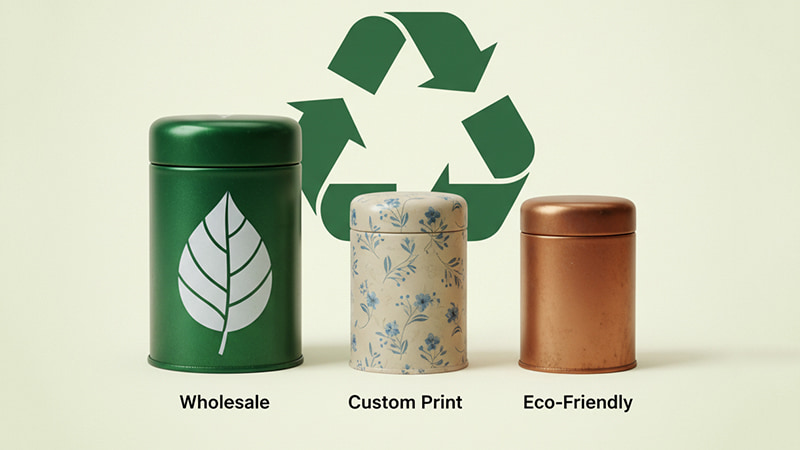
Today’s premium requests are not just about decoration. They are also about execution quality and production precision.
Metal tea tins are no longer secondary packaging for premium tea brands. They are part of the value proposition itself. In 2025, the brands that win in premium tea are increasingly the ones that treat packaging as a system of freshness, identity, ritual, collectability, and long-term brand memory—not just as a protective shell.
Holen Sie sich die neuesten Informationen und Sonderangebote


 IPv6-Netzwerk unterstützt
 Deutsch
 English
 Français
 Español
 Português