
Tin boxes are not oven-safe and should never be used for baking.
This is one of the most common questions we receive from bakery brands, gift brands, and importers. And it’s an important one—because using tin packaging incorrectly can create safety risks, quality issues, and unnecessary liability.
That said, tin packaging still plays a major role in bakery products, when used the right way. Understanding this difference can help brands avoid mistakes while unlocking real packaging value.
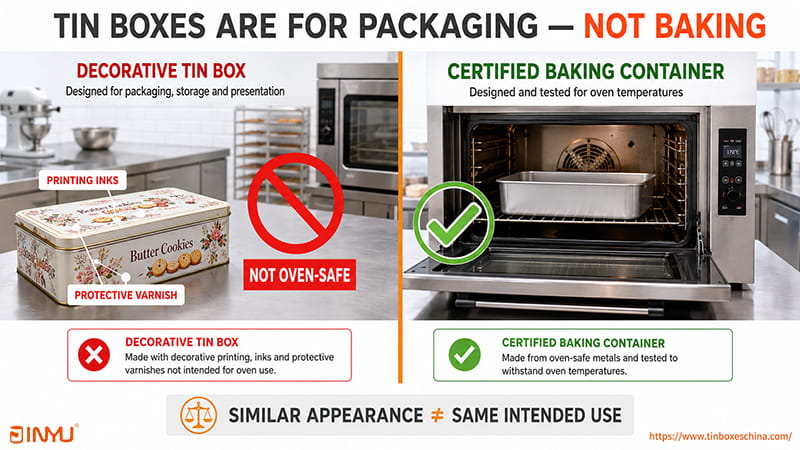
No. Tin boxes should not be placed in an oven or used for baking.
Standard tinplate boxes are manufactured for packaging, storage, and presentation, not for direct exposure to high temperatures. When heated in an oven, tin boxes may experience:
From both a food safety and brand responsibility standpoint, baking in tin boxes is not recommended.
Tin boxes are typically made from tinplate—a thin steel sheet coated with tin, then finished with printing inks and protective varnishes.
This structure performs very well under normal conditions:
However, these coatings are not food-grade baking coatings. They are not engineered to withstand sustained oven temperatures. This is why bakery molds and tin packaging serve completely different purposes, even if they look similar at first glance.
The confusion usually comes from appearance.
Some baking trays are made from aluminum or silicone and are certified for oven use. Tin boxes may resemble them visually, but their design priorities are very different.
Tin packaging is developed for:
This makes tin boxes ideal for bakery packaging tin solutions, but not for baking itself.
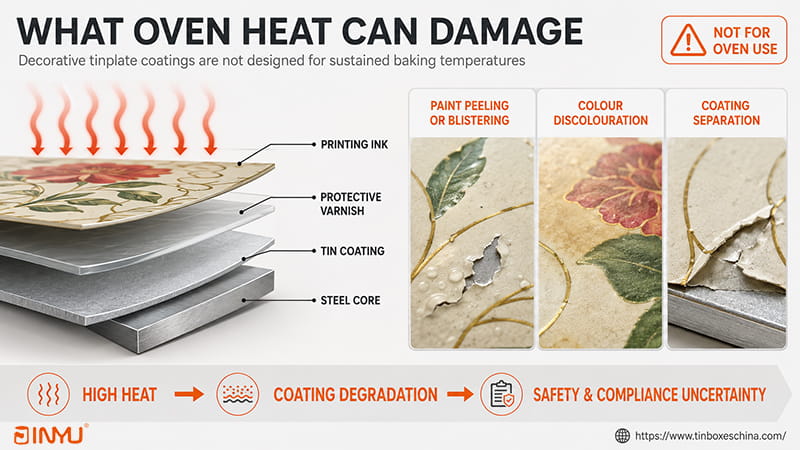
In real-world scenarios, heating tin boxes can cause:
Even if a tin box appears “fine” after heating, that does not mean it is safe or compliant. For food brands, avoiding this uncertainty is always the smarter choice.
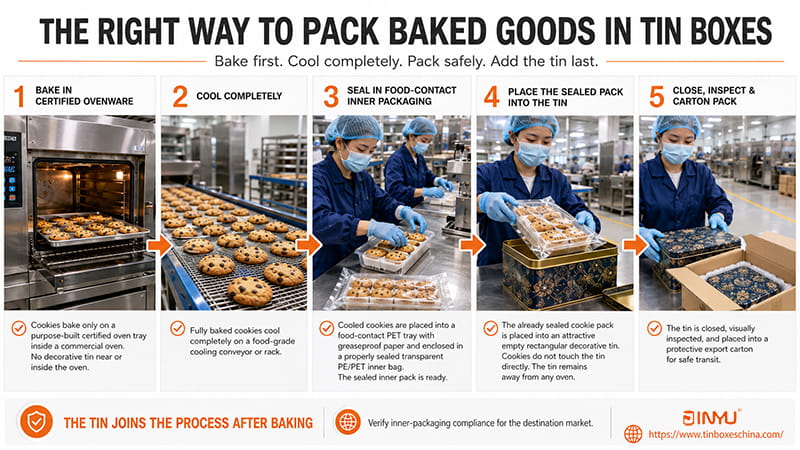
While tin boxes cannot go in the oven, they are widely used after baking—especially for cookies, biscuits, and seasonal gift products.
The safest and most common approach is to combine tin boxes with inner packaging, such as:
This method prevents direct food contact while allowing brands to benefit from the strength and premium look of metal packaging.
Using an inner liner is not only about compliance—it also delivers commercial value:
For many brands, this combination is what makes custom cookie tin boxes such a strong packaging choice.
Many of our European clients—as well as brands from other global markets—use tin boxes as festive gift packaging, especially for Christmas cookies.
Their typical process looks like this:
In these cases, the tin is not part of the baking process. It becomes part of the gift experience, often reused or displayed long after the product is consumed.
This is why many buyers look for a reliable Christmas cookie tin manufacturer rather than an oven-safe container.
When inner packaging is used, it must comply with the regulations of the target market.
Depending on where the product is sold, this may involve:
From a manufacturer’s perspective, working with compliant food grade inner liners for tin packaging helps brands:
As a China-based manufacturer, we are familiar with multi-market requirements and can offer practical compliance guidance at the packaging design stage.
In most export-oriented projects, direct food contact is avoided unless a certified inner layer is used.
Using inner packaging gives brands greater flexibility across markets and simplifies compliance—especially for companies selling to multiple regions.
For baked goods, the real question is not “Can tin boxes go in the oven?”
It’s “How should tin packaging be used after baking?”
When designed correctly, tin boxes with proper inner packaging can:
If you’re planning a bakery project and exploring metal packaging for export, choosing the right structure early can prevent costly mistakes later. We’re always happy to share practical options based on real export experience.
Holen Sie sich die neuesten Informationen und Sonderangebote


 IPv6-Netzwerk unterstützt
 Deutsch
 English
 Français
 Español
 Português