
If you spend enough time in the packaging industry, one thing becomes clear: a lunch box is never just a container.
Behind every product decision sits a material choice shaped by usage habits, safety standards, logistics realities, and branding goals.
Some buyers prioritize microwave compatibility.
Others care more about durability or weight.
For brand owners, especially, the first question is often much simpler: “How much can we customize it?”
Understanding how different lunch box materials actually perform in real-world scenarios helps avoid costly mismatches later on.
Today’s global lunch box market relies on a relatively stable mix of materials, each serving a distinct purpose rather than competing directly with one another.
| Material | Typical Form | Key Strength | Common Use |
|---|---|---|---|
| Plastic (PP / Tritan) | Microwave lunch box | Lightweight, low cost | Daily commuting |
| Stainless Steel (304 / 316) | Metal lunch box | Durable, food safe | Health & kids |
| Borosilicate Glass | Glass lunch container | Heat resistant | Office & home |
| Silicone | Collapsible lunch box | Space saving | Travel & camping |
| Aluminum | Lightweight metal box | Fast heat transfer | Outdoor picnic |
| Tinplate | Tin lunch box | Custom printing | Kids & branding |
| Bamboo Fiber Composite | Eco lunch box | Sustainable image | Eco brands |
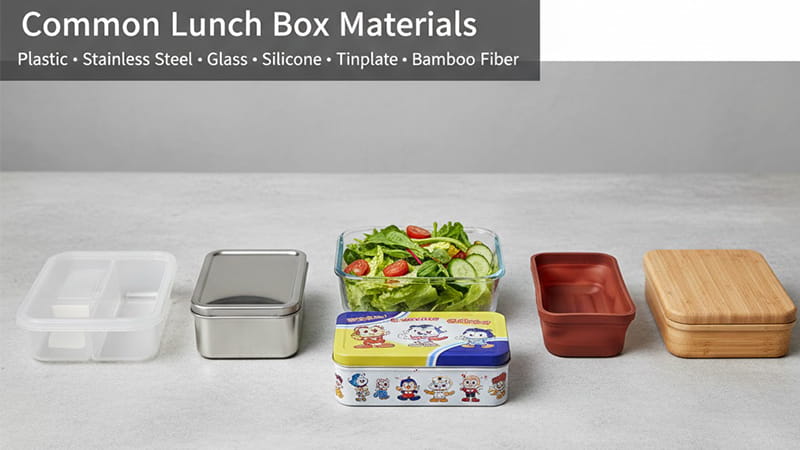
Plastic remains the most widely used lunch box material, largely due to its efficiency in mass production.
Extremely lightweight and easy to carry
Cost-effective at scale
Wide flexibility in colors, shapes, and internal layouts
PP lunch boxes can be microwave safe with proper labeling
From a long-term use perspective, plastic does have constraints:
Susceptible to staining and odor retention
Shorter usable lifespan
Growing demand for BPA-free lunch boxes in many markets
Common users:
Students, office workers, entry-level consumer products.
Stainless steel lunch boxes, typically made from 304 or 316 grades, are chosen primarily for safety and durability.
Does not absorb odors or colors
High resistance to impact and wear
Long service life
316 stainless steel performs better with acidic foods
Not microwave compatible
Opaque design limits food visibility
Higher unit cost compared to plastic
Best suited for:
Health-conscious consumers, children’s lunch boxes, outdoor use.
Glass lunch boxes are widely used where reheating and food purity matter most.
High chemical stability
No flavor or color retention
Microwave and oven safe (lid removed)
Heavier than other materials
Fragile during transport
Higher breakage and shipping costs
Typical applications:
Office lunches, home use, healthy meal-prep brands.
Silicone lunch boxes focus on portability and compact storage.
Foldable and space-saving
Wide temperature tolerance
Soft, impact-resistant surface
Limited rigidity
Less suitable for liquid-heavy meals
Perceived value depends heavily on design quality
Best for:
Camping, travel accessories, outdoor kits.
Aluminum lunch boxes are often used in outdoor-oriented product lines.
Very lightweight
Fast heat conduction
Strong metallic appearance
Easily deformed under pressure
Surface scratches quickly
Usually requires food-grade inner coating
Typical use cases:
Outdoor picnic sets, vintage-style collections.
A tin lunch box is rarely selected for reheating convenience. Its value lies elsewhere.
High-quality decorative printing (CMYK and spot colors)
Strong retro and nostalgic appeal
Ideal for IP licensing and storytelling
Fully recyclable metal material
From a usage standpoint, tinplate lunch boxes are commonly positioned as branded items rather than everyday food containers.
From a manufacturer’s standpoint, tinplate offers unmatched flexibility in decoration—such as full-wrap printing and embossing—while maintaining strong structural consistency at competitive unit costs, especially for mid-to-large production runs.
Not recommended for high-moisture or oily foods
Requires food-grade inner lacquer
Often used for dry food, outer packaging, or children’s products
Typical applications:
Children’s lunch boxes, promotional items, licensed IP products, and custom tin lunch box projects.
Bamboo fiber lunch boxes are often selected for their environmental positioning.
Natural, organic appearance
Strong sustainability narrative
Suitable for molded designs
Composite material, not pure bamboo
Long-term water resistance is limited
Microwave performance varies by formulation
Best for:
Eco-focused brands and minimalist product lines.
| Usage Priority | Recommended Material |
|---|---|
| Daily commuting | Plastic (PP), glass |
| Children’s products | Stainless steel, tinplate |
| Premium health positioning | Glass, 316 stainless steel |
| Outdoor & camping | Silicone, aluminum |
| Brand customization | Tin lunch box |
| Sustainability branding | Bamboo fiber composite |
Material selection in the lunch box industry is becoming increasingly intentional.
Plastic continues to dominate volume, but expectations around safety and longevity are rising.
Stainless steel and glass remain strong where function and health are the priority.
At the same time, tinplate lunch boxes are gaining traction as high-impact branded products, particularly in children’s collections, promotional campaigns, and limited editions.
Selecting the right material is often the first step in a successful lunch box project. If your goals involve high-impact branding and customization, tinplate offers a practical and proven path forward.
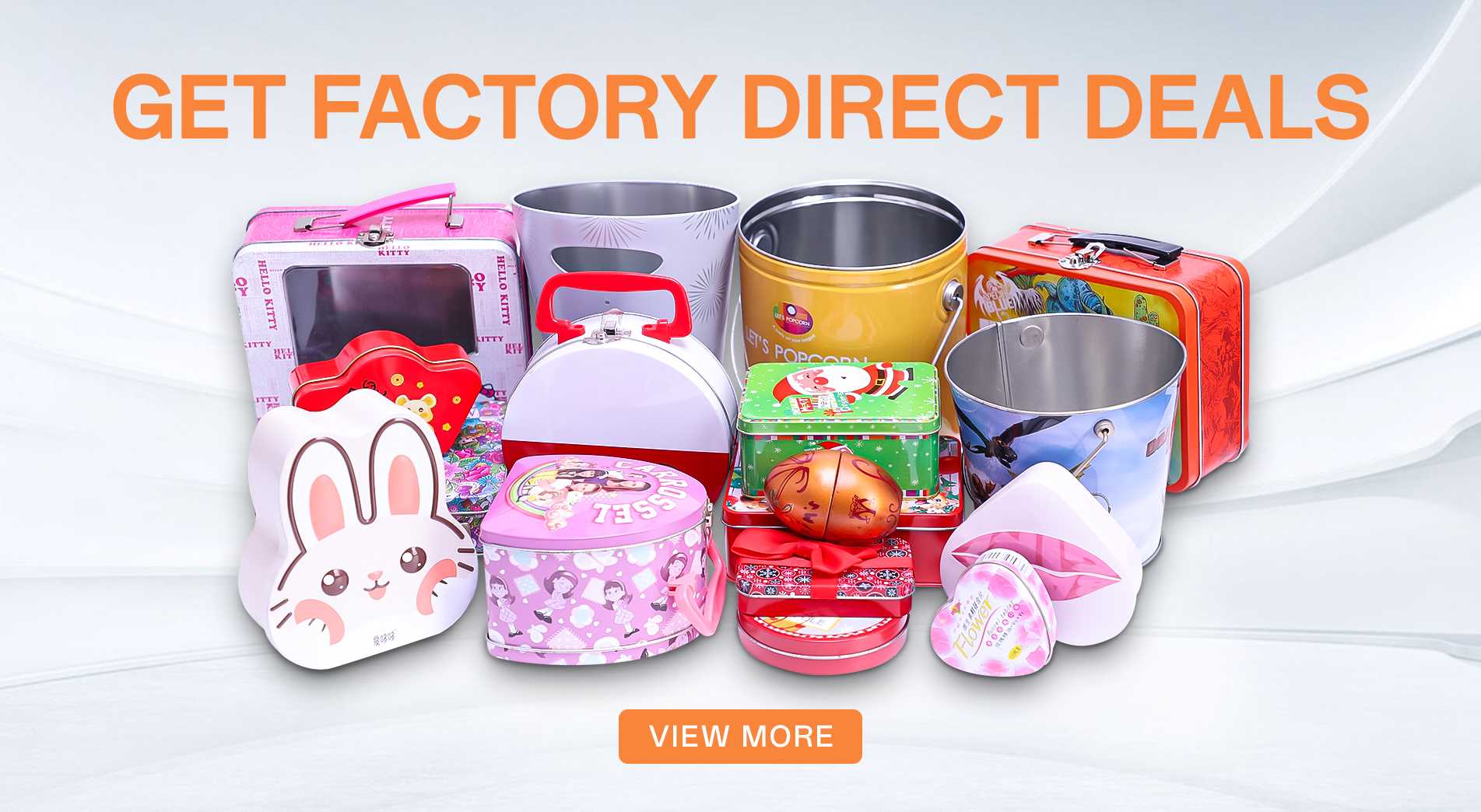
Jinyu works closely with brands to translate design concepts into functional, well-crafted tin lunch box solutions.
→ Explore our custom lunch box capabilities
Holen Sie sich die neuesten Informationen und Sonderangebote


 IPv6-Netzwerk unterstützt
 Deutsch
 English
 Français
 Español
 Português