
For chocolate brands, packaging is never just a box.
A good chocolate tin needs to do several jobs at the same time. It should protect the chocolate, look nice on the shelf, feel suitable as a gift, and still stay within your cost target. This sounds simple, but in real production, many problems come from choosing the wrong structure at the beginning.
Some brands spend too much money on a special shape but ignore the lid. Some choose a beautiful finish, but the tin is too thin and feels cheap in the hand. Some use the same packaging for chocolate bars, truffles, and filled chocolate, then wonder why the result is not stable.
As a tin box manufacturer in China, we see these situations quite often. So here is a practical guide from the production side.
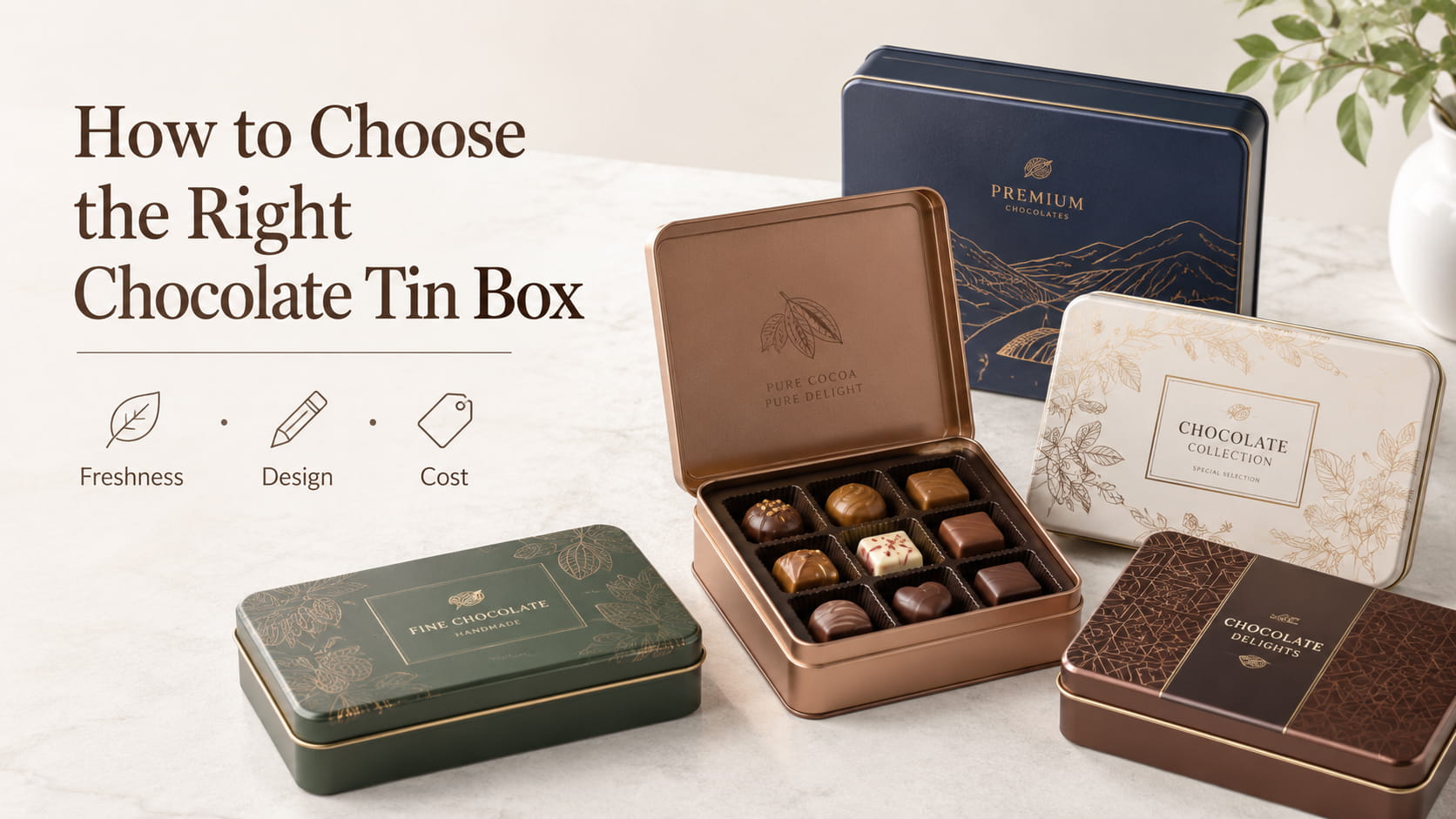
Before choosing the tin shape or printing design, you need to look at the chocolate itself.
Different chocolate products need different levels of protection.
A simple chocolate bar is easier to pack. It is usually wrapped first, then placed inside a tin. The tin mainly gives protection, shelf appeal, and gift value.
Truffles, filled chocolate, pralines, and ganache are different. They are more sensitive to temperature, moisture, smell, and handling. For these products, the tin is only one part of the packaging. You may also need paper cups, foil wrapping, food-grade trays, or an inner pouch.
This is why we usually ask customers about the product first:
The right answer depends on these details. There is no single “best chocolate tin” for every brand.
Tinplate packaging is strong, reusable, and good for gift chocolate. Compared with paper boxes, a metal tin gives better protection against light, pressure, and outside handling damage.
But the tin itself does not solve everything.
Chocolate is still sensitive to heat and humidity. If the storage condition is poor, even a high-quality tin cannot save the product. For most chocolate packaging projects, we suggest using the tin together with proper inner packaging.
For example:
| Chocolate Type | Common Tin Solution | Inner Packaging Suggestion |
| Chocolate bars | Slide lid tin or hinged tin | Foil wrap or paper sleeve |
| Truffles | Hinged tin or tight lid tin | Paper cups, tray, or foil lining |
| Filled chocolate | Tin with better sealing | Individual wrap or inner tray |
| Holiday gift chocolate | Custom printed tin | Insert tray for better display |
| Premium chocolate set | Custom shape or embossed tin | Food-grade liner and tray |
The tin gives the first impression. The inner packaging protects the taste and structure. Both matter.
Many buyers focus on printing first. They care about color, logo, embossing, and surface finish. These are important, of course. But from a packaging function point of view, the lid is often more important.
A beautiful tin with a loose lid does not feel premium. It may also allow more air and moisture to get inside, especially during long storage or shipping.
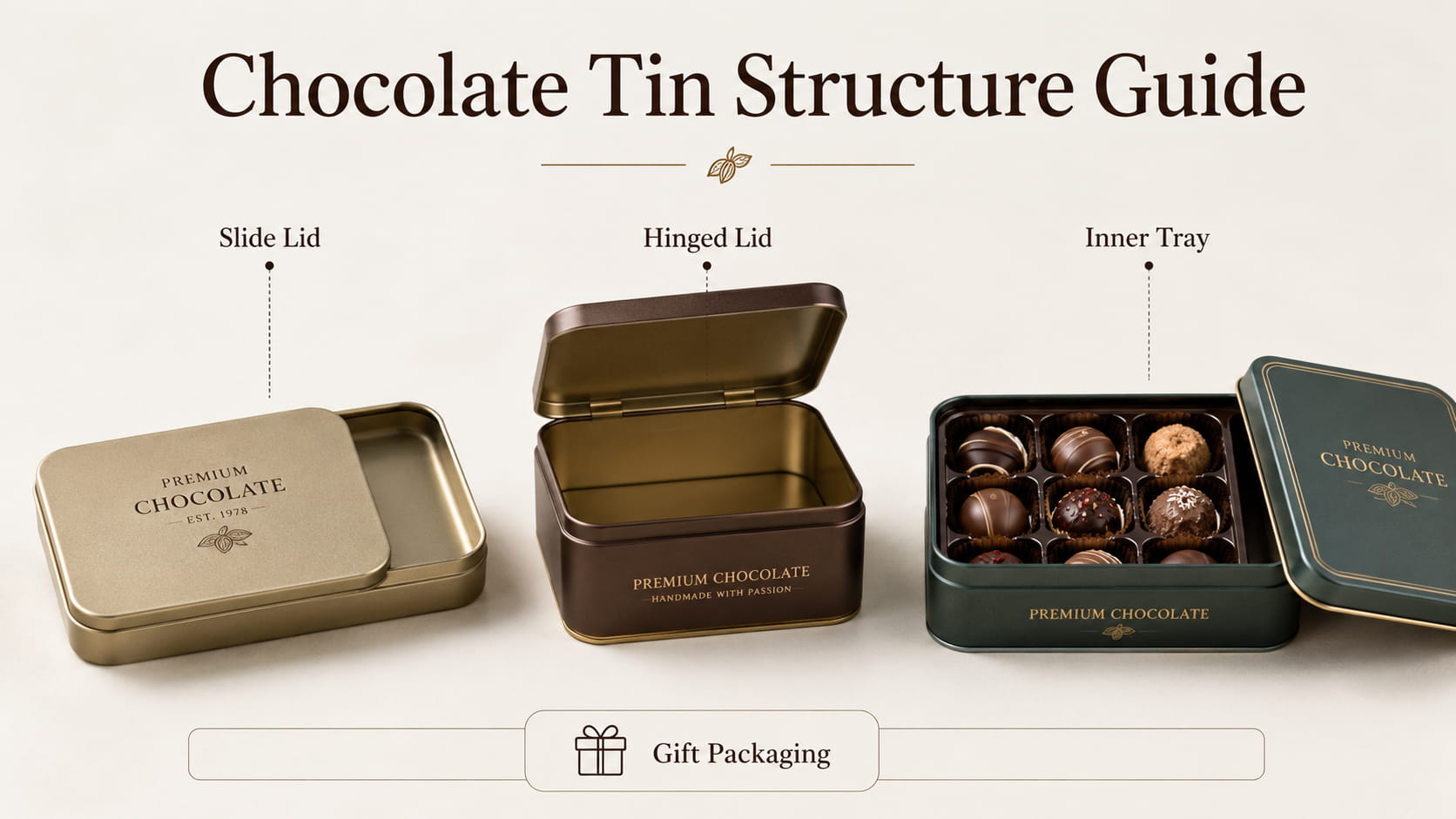
Common lid options include:
This is often used for chocolate bars, mint tins, candy tins, and simple gift packaging. It looks clean, is easy to open, and works well for flat products.
It is a good choice when you want a simple, practical, and cost-friendly structure.
A hinged tin feels more complete and gift-like. It is often used for chocolate assortments, cookie tins, tea tins, and seasonal gift sets.
Customers like this structure because the lid stays connected to the body. It also gives a better opening experience.
This is a classic structure for round, square, or rectangular tins. It is simple and flexible. Many stock molds use this lid type, so it can help reduce tooling cost.
For more sensitive products, a tighter lid or gasket-style structure may be considered. It costs more than a standard lid, but it can be useful for premium chocolate, filled chocolate, or products that need better protection.
However, it is not always necessary. For many chocolate bars or wrapped pieces, good inner wrapping plus a normal tight-fit tin is already enough.
This is where experience matters. Sometimes the best solution is not the most expensive one.
Custom shapes are attractive. A heart-shaped tin, book-shaped tin, house-shaped tin, or special holiday tin can help your product stand out.
But custom shapes also mean higher mold cost, longer development time, and more production risk.
For a new chocolate brand, we usually suggest checking existing stock molds first. Many standard round, square, rectangular, and hinged tins can already look very good with the right printing and finish.
Custom mold is more suitable when:
For smaller test orders or first product launches, a stock mold with custom printing is often a smarter choice.
Many buyers only compare tin size and printing cost. But tinplate thickness also affects the final feeling.
If the tin is too thin, it may feel light and cheap. It can also dent more easily during transportation.
If the tin is too thick, the cost and shipping weight increase. For most chocolate tin box projects, the thickness needs to balance strength, hand feel, and budget.
For gift chocolate, the tin should feel solid enough when the customer picks it up. This small detail affects the perceived value of the chocolate.
A premium chocolate in a weak tin is a bad match.
Chocolate packaging is emotional. People often buy it as a gift, for holidays, or for a special moment. So the outside design matters a lot.
For tin boxes, common surface options include:
Glossy varnish makes colors look brighter. It works well for Christmas chocolate tins, holiday gift tins, children’s chocolate, and colorful retail packaging.
Matte varnish gives a softer and more modern look. It is often used for premium chocolate, dark chocolate, boutique brands, and minimalist designs.
Embossing can make the logo or pattern stand out. It gives the tin a better touch and makes the package feel more valuable.
But deep embossing should be used carefully. It may increase tooling difficulty and is not suitable for every design. Simple logo embossing is usually safer and more elegant.
Because tinplate is metal, some designs can use the natural metallic base to create a special effect. This is useful for luxury chocolate, festive packaging, and limited editions.
A good factory should help check whether your artwork is suitable for tin printing. Tin printing is different from paper printing. Some colors, gradients, and very small details need adjustment before mass production.
A nice tin outside is not enough. When the customer opens the tin, the inside layout also matters.
If the chocolate pieces move around inside the tin, the product may look messy or damaged. This is especially important for online sales and export orders.
Common inner options include:
For truffles and assorted chocolate, an inner tray can make the product look more organized and premium. For chocolate bars, a paper sleeve or foil wrap may be enough.
The goal is simple: when the customer opens the tin, everything should still look clean, stable, and worth the price.
Not every project needs a luxury tin. For promotional chocolate, supermarket products, or seasonal campaigns, cost control is very important.
You can usually save cost in these areas:
The key is not to make the tin cheap. The key is to spend money where it really matters.
For example, if the product is a premium truffle set, the lid structure and inner tray may be more important than a complicated tin shape. If the product is a Christmas gift tin, the printing and shelf appearance may matter more.
Different products need different cost decisions.
There are also areas where saving too much may hurt the product.
Do not make the tin too thin for a premium chocolate line. Customers can feel it immediately.
Do not use poor printing if the tin is meant for retail shelves. Bad color control makes the whole product look low-end.
Do not ignore the inner packaging for soft or filled chocolate. Damage inside the tin will cause complaints even if the tin itself looks nice.
Do not choose the cheapest structure without checking how the lid fits. A loose lid can make the package feel careless.
For chocolate packaging, the customer’s first feeling is very important. Once they think the package feels cheap, it is hard for the chocolate to look premium again.
One reason many chocolate brands like metal tins is that customers often keep them after eating the chocolate.
They may use the tin to store tea bags, small tools, sewing items, coins, buttons, or office supplies. This gives the brand more exposure after the chocolate is gone.
For this reason, collectible designs work well for chocolate tins. Holiday designs, city themes, floral patterns, vintage artwork, and limited-edition collections can all encourage customers to keep the tin.
This is something paper boxes usually cannot do as well.
A reusable tin does not only protect the product. It keeps the brand in the customer’s home for a longer time.
Here is a simple way to think about your chocolate tin project:
| Your Main Goal | Suggested Tin Solution |
| Control cost | Stock mold, simple printing, standard lid |
| Improve gift value | Hinged tin, nice finish, inner tray |
| Pack chocolate bars | Slide lid or rectangular tin with inner wrap |
| Pack truffles | Hinged tin or tight lid tin with tray |
| Build premium image | Matte finish, embossing, thicker hand feel |
| Holiday promotion | Custom printing, festive colors, reusable design |
| Long-distance shipping | Stronger tin, stable inner layout, good carton packing |
This table is only a starting point. The final choice should still depend on your chocolate type, sales channel, target price, and order quantity.
For gift chocolate and retail packaging, a tin box usually gives better protection and a more premium feeling. Paper boxes are lighter and cheaper, but they do not have the same reusable value or metal feel.
Not always. If the chocolate is already individually wrapped, a standard tight-fit tin may be enough. For more sensitive products such as truffles, ganache, or filled chocolate, better sealing and inner packaging should be considered.
No. Many brands start with existing molds and only customize the printing. This is faster and more cost-friendly. Custom molds are better for mature products, premium lines, or special brand concepts.
In many cases, chocolate should not be placed directly against bare tinplate. A food-grade coating, paper liner, foil wrap, tray, or inner bag is usually used depending on the product and market requirement.
The main factors are size, shape, tinplate thickness, mold type, printing design, finish, embossing, inner tray, packing method, and order quantity.
When choosing a chocolate tin box, do not only ask, “How much is this tin?”
A better question is:
What kind of chocolate are we packing, and what should the customer feel when they open it?
For a simple chocolate bar, you may need a clean and cost-effective tin. For truffles, you may need better inner protection. For a holiday gift set, the printing and display effect may be the most important. For a premium collection, the hand feel, lid fit, and finishing details all matter.
A good chocolate tin should make the product look more valuable, protect it during storage and transport, and still make sense for your budget.
That is the real balance.
At our factory, we usually help customers compare stock molds, custom mold options, printing methods, lid structures, and inner packaging before production. This saves time, reduces mistakes, and helps the final tin match the chocolate instead of just looking nice in a drawing.
If you are developing chocolate bars, truffles, pralines, or seasonal chocolate gift sets, choosing the right tin structure at the beginning will make the whole project much easier.
Holen Sie sich die neuesten Informationen und Sonderangebote


 IPv6-Netzwerk unterstützt
 Deutsch
 English
 Français
 Español
 Português